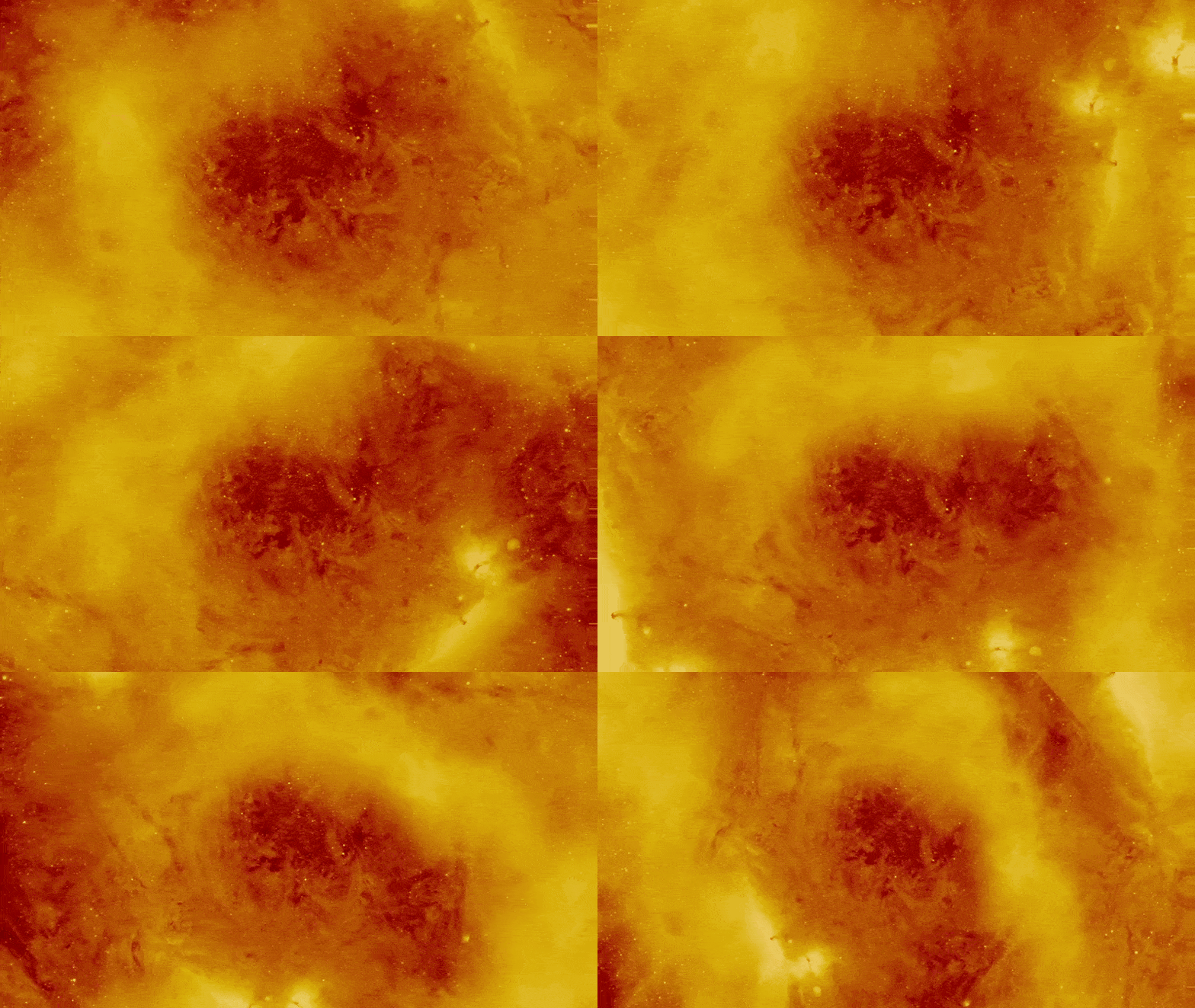
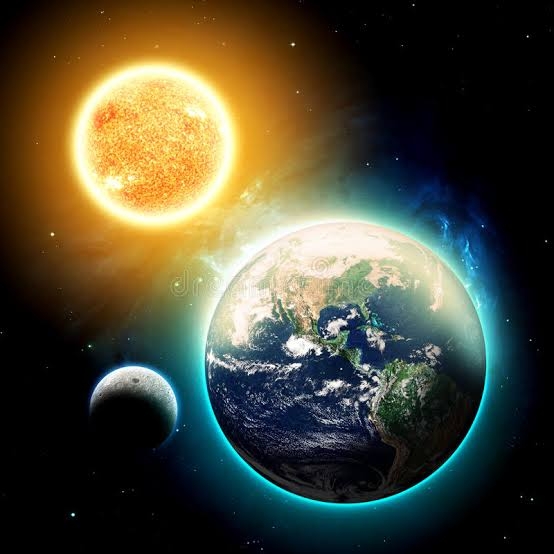
09 February. Today a big event is going to happen in space, during Wednesday-Thursday a new ‘sun explosion’ can hit our Earth, due to which there is a possibility of a geomagnetic storm. Although there was a geomagnetic storm just a week before today, but there was no harm due to it, but today’s storm is said to be more severe than before, so the earth can be damaged.
‘Solar explosion may hit Earth today’
The information about this storm has been given by the Center of Excellence in Space Sciences of the Indian Institute of Science Education and Research. He has made a tweet about this. In which he has written that ‘Today i.e. on February 9, the Earth may have to face a geomagnetic storm. This storm can come between 11.18 am Indian time to 3.23 pm on February 10.
There may be danger from this storm
The potential for this storm could be 451-615 kmph. Due to this storm there may be problems in communication system, broadcasting, radio network, navigation etc.
Let us know in detail what is a geomagnetic storm?
In fact, geomagnetic storms, commonly known as solar storms, are caused by a change in the magnetic field. This change occurs when the coronal mass ejection coming from the Sun collides with the Earth’s magnetic field. This can lead to solar energetic particle (SEP) events, geomagnetically induced currents (GICs), ionospheric disturbances. There are three types of geomagnetic storms.
Preliminary, Main and Recovery (Three Types of Hurricane)
. The preliminary stage is also known as SSC. However, not all geomagnetic storms have an early stage.
. The duration of the main phase is usually 2-8 hours.
. The recovery phase occurs when Dst changes from its minimum value to its quiet time value
What is Coronal Mass Ejection?
Let us tell you that the flames emanating from the Sun are called coronal mass ejections, during which a large part of the plasma and magnetic field ejects from the corona of the Sun, which can be fatal. this incident
Geomagnetic storm intensity is reported in several different ways and these methods are as follows:
kashmir index , a-index, G-scale of the US National Oceanic and Atmospheric Administration.
largest geomagnetic storm
The largest geomagnetic storm occurred in September 1859, which destroyed parts of the US telegraph network.
Our eyes are continuously bombarded by an enormous amount of visual information – millions of shapes, colors, and ever-changing motion all around us.
For the brain, this is no easy feat.
On the one hand, the visual world alters continuously because of changes in light, viewpoint, and other factors. On the other, our visual input constantly changes due to blinking and the fact that our eyes, head, and body are frequently in motion.
To get an idea of the “noisiness” of this visual input, place a phone in front of your eyes and record a live video while you are walking around and looking at different things.
The jittery, messy result is exactly what your brain deals with in every moment of your visual experience.
This can be seen also in the video below. The white circle on the right shows potential eye movements, and the blurry blob on the left reveals the jumpy visual input in every moment.
Yet, seeing never feels like work for us. Rather than perceiving the fluctuations and visual noise that a video might record, we perceive a consistently stable environment.
So how does our brain create this illusion of stability? This process has fascinated scientists for centuries and it is one of the fundamental questions in vision science.
The time machine brain
In our latest research, we discovered a new mechanism that, among others, can explain this illusory stability.
The brain automatically smoothes our visual input over time. Instead of analyzing every single visual snapshot, we perceive in a given moment an average of what we saw in the past 15 seconds. So, by pulling together objects to appear more similar to each other, our brain tricks us into perceiving a stable environment.
Living “in the past” can explain why we do not notice subtle changes that occur over time.
In other words, the brain is like a time machine which keeps sending us back in time. It’s like an app that consolidates our visual input every 15 seconds into one impression so that we can handle everyday life.
If our brains were always updating in real time, the world would feel like a chaotic place with constant fluctuations in light, shadow, and movement. We would feel like we were hallucinating all the time.
We created an illusion to illustrate how this stabilization mechanism works.
Looking at the video below, the face on the left side slowly ages for 30 seconds, and yet, it is very difficult to notice the full extent of the change in age. In fact, observers perceive the face as aging more slowly than it actually is.
To test this illusion we recruited hundreds of participants and asked them to view close-ups of faces morphing chronologically in age in 30-second timelapse videos.
When asked to tell the age of the face at the very end of the video, the participants almost consistently reported the age of the face that was presented 15 seconds before.
As we watch the video, we are continuously biased towards the past and so the brain constantly sends us back to the previous ten to 15 seconds (where the face was younger).
Instead of seeing the latest image in real time, humans actually see earlier versions because our brain’s refresh time is about 15 seconds. So this illusion demonstrates that visual smoothing over time can help stabilize perception.
What the brain is essentially doing is procrastinating. It’s too much work to constantly deal with every single snapshot it receives, so the brain sticks to the past because the past is a good predictor of the present.
Basically, we recycle information from the past because it’s more efficient, faster, and less work.
This idea – which is also supported by other results – of mechanisms within the brain that continuously bias our visual perception towards our past visual experience is known as continuity fields.
Our visual system sometimes sacrifices accuracy for the sake of a smooth visual experience of the world around us. This can explain why, for example, when watching a film we don’t notice subtle changes that occur over time, such as the difference between actors and their stunt doubles.
Repercussions
There are positive and negative implications to our brain operating with this slight lag when processing our visual world. The delay is great for preventing us from feeling bombarded by visual input every day, but it can also risk life-or-death consequences when absolute precision is needed.
For example, radiologists examine hundreds of images in batches, seeing several related images one after the other. When looking at an X-ray, clinicians are typically asked to identify any abnormalities and then classify them.
During this visual search and recognition task, researchers have found that radiologists’ decisions were based not only on the present image, but also on images they had previously seen, which could have grave consequences for patients.
Our visual system’s sluggishness to update can make us blind to immediate changes because it grabs on to our first impression and pulls us toward the past.
Ultimately, though, continuity fields promote our experience of a stable world. At the same time, it’s important to remember that the judgments we make every day are not totally based on the present, but strongly depend on what we have seen in the past.
Humans are considered to be the most intelligent living organisms on earth. Humans have the ability to think and react to situations, whereas, animals do not. Human brain is considered large compared to the animal brain. Let us see the important difference between the human brain and animal brain.
Human Brain vs Animal Brain
Following are the important difference between human brain and animal brain:
Smell
The olfactory bulb of humans is smaller as compared to animals. Two rodents, capybara and agouti, have the largest olfactory bulbs among all mammals. Olfactory bulbs of bears are five times bigger than humans.
Navigation
The pigeon’s brain has specialised cells that can respond to magnetic stimulus. They can detect their geographical position by detecting changes in the earth’s magnetic field.
Photographic Memory
Children can memorize a lot of information due to photographic memory. Chimpanzees possess the same quality. When compared with humans, young chimpanzees have a better ability to memorize the number sequences.
Brain Size
The brain size of most of the animals is smaller than that of humans (1.2 kg). But there are still several animals that have a brain size larger than the humans. These include dolphins (1.5-1.7 kg), elephants and blue whales (5 kg), killer whales (6 kg).
More Glia
Glia are the supportive cells of neurons. The glia to neuron ratio is the indicator of brainpower. The glia to neuron ratio of a Minke whale is 5.5 times greater than that of humans. A few animals have a smaller glia to neuron ratio.
Neurogenesis
Neurogenesis is the process of replacing damaged or lost neurons. Teleost fish performs neurogenesis at a rate of 100 times higher than mammals. In mammals, neurogenesis occurs at a specific rate during development. Later, the process is restricted to the areas of the brain responsible for smell and memory.
What is the Human Brain?
Human brain is the part of the central nervous system located inside the skull. It controls and coordinates all the functions of the body. It is divided into:
Cerebrum
Cerebellum
Brain stem
Cerebrum is the largest part of the human brain with two cerebral hemispheres. The brainstem connects the cerebrum to the spinal cord. It is made up of medulla oblongata, pons and midbrain.
What is Animal Brain?
Animal brain is also located in the central nervous system. It is of three types:
Invertebrates’ brain
Vertebrates’ brain
Mammals’ brain
The most complex invertebrates’ brain occur in arthropods, that comprises, twin parallel nerve cords extending through the body.
A vertebrates; brain is made up of a forebrain, a midbrain and a hindbrain.
Similarities Between Human and Animal Brain
The similarities between human brain and animal brain include:
The human and the animal brain form a part of the central nervous system.
The brain of both are made up of neurons and neuroglia.
Its main function is to control thoughts and body movement.
The brain of all the vertebrate animals is divided into forebrain, midbrain, cerebellum, hind brain, medulla oblongata and pons.
Writing is one of the most important inventions of humanity. It allowed us to record our history, ideas and discoveries and spread them across the globe for all to know. As the writing developed so did writing instruments and techniques.
Earliest writing tools didn’t use pigment to live mark on the surface but were made to be rigid so they could engrave texts into different materials. Chinese, for instance, carved into turtle shells.
Ancient Sumerians and Babylonians used triangular stylus to write in soft clay tablets which would be later baked. Romans wrote in wax tablets with styluses which allowed them to erase written text. These methods, of course, had their disadvantages. Clay tablets were heavy and brittle. Wax tablets were not heat resistant. Because of that people tried to find other solutions. They appeared in the form of writing tools that use pigment of some sort. Scribes of Ancient Egypt used reed pens which were made from a single reed straw, cut and shaped into a point. As a surface for writing with these pens was used papyrus. Reed pens didn’t last long when used and were too stiff so they were replaced with quills. Quills are pens made from flight feathers of large birds. The hollow shaft of these feathers holds the ink which flows to the tip, which is cut into the shaft, by capillary action. Different materials were used to be written on with quills, like parchment and vellum. It is known that some of the Dead Sea Scrolls, dating back to 100 BC, were written with quills. First quills were cut into a square tip and rigid and were like that for many centuries imitating reed pens. From the 17th century, when writing became more popular, quills were made to be more flexible and cut to a point. Some hundred years earlier, deposits of graphite were discovered in England which marked the birth of pencils which didn’t use ink but a core of a solid pigment, graphite in the beginning and later mixture of powdered graphite and clay. They were at first covered in leather and later in thin wooden cylinder as we still do today. They became popular because they were easy to use, couldn’t spill and could be easily erased if a mistake is made, unlike ink. Some even come with an eraser on one end.
Popularity of quills lasted until 19th century when the first pens with metal nibs appeared (although there were earlier tries of metal pens but they didn’t catch on). John Mitchell from Birmingham was the first to mass-produce pens with metal nibs in 1822. These had a handle and a metal point with a split that held a small amount of ink when dipped. They worked the same as quills but lasted much longer, didn’t need to be sharpened and could be made to a much finer point. Bartholomew Folsch received a patent in England for a pen with an ink reservoir in 1809. French Government patented a fountain pen in May 1827 which was an invention of Romanian Petrache Poenaru. Ballpoint pen was invented in 1888, by John J. Loud and improved by László Bíró in 1938. Slavoljub Eduard Penkala invented mechanical pencil in 1906 and the first solid-ink fountain pen in 1907. Felt-tipped pen, which was a predecessor of markers and highlighters, was an invention of Yukio Horie from Japan. Roller ball pen, which uses water-based ink, appeared in 1963, also in Japan. Porous point pens that have points made from porous materials such as felt or ceramic appeared in 1990s. We today still use pens and pencils for writing and drawing as well as styluses (but those just on touch screens
❤️Everything is energy, Energy follows thought, Thought becomes belief, Belief creates reality, and Reality determines destiny!
If you don’t like the way your life is going, or some of the things showing up in it all you have to do is change the way you think and believe. When you argue in favor of a limitation, it becomes yours… where your thoughts go your energy will follow, every time without fail and where ever they go they will begin weaving your reality, according to the nature of those thoughts.
In the course of a normal day it’s a good bet that someone will do or say something which disrupts your energy a little bit, resulting in an aversion reaction from you. Each and every time this happens, that little disruption will hunker down to reside somewhere in your aura or chakras, as unresolved negative emotion unless you learn to just let it go without holding onto it.
Most folks don’t ‘catch & release’ such energies; for some reason we prefer to collect them, and hold onto them, never realizing just how toxic that energy is. So… you think maybe you’ve got a few “klingons” lurking about in your energy system, and want to evict them.
As said previously the human energy system is actually fairly easy to clean and maintain, all you have to do is ‘show up’ with that intent and half the work is already done.
To be sure, it seems there are any number of techniques and meditations out there which are designed to help maintain the energy system, and I would suggest you try all which vibe positively with you.
In my personal experience and practice I find that absolutely nothing works better than sound, to rid the energy system of unwanted debris.
The musician Steve Halpern is a pioneer of spiritual acoustics. Several years back he released a CD entitled “Spectrum Suite” which balances and attunes the chakras one by one. The musician Jonathan Goldman is another pioneer in this field.
I highly recommend his work “Chakra Chants” — as the deep voice Tibetan chants he employs do a magnificent job of cleaning & balancing the chakra system.
The San Francisco artist Alex Grey creates astoundingly beautiful paintings of the energetic human in all its glory, and many people include them in their guided visualizations.
Going thru life with a muddy colored aura and blocked chakras is like hauling a load of bricks uphill. Once you begin the process of cleaning up your energy system, everything starts to become lighter, more effortless.
Once you begin clearing the blockages from the chakras, especially the heart & solar plexus, you will invariably discover old emotional hurts coming to the surface, some having been completely forgotten.
Don’t let this throw you off your intent. When such things surface it’s just a normal part of the process, and here’s how you deal with it.
Almost without fail, such negative energy is associated with a painful lesson we’ve learned. We seek to keep the lessons learned while removing the negative charge attached to it. When these things come up simply visualize a fully charged battery, any kind of a battery. The battery represents the lesson learned while the energy within is toxic, and unwanted.
In whatever manner works best for you, hold that battery in your minds eye, and then drain that sucker dry.
Some blockages might have been around for a while, so repeat as needed. You won’t have to guess whether or not ‘it’s working’, you’ll be able to feel the difference as you release these dense negative energies from your light body.
The human energy system is not only an elegant and complex life support system for the soul; it’s also the means by which we have access to our eternal, unlimited nature, and the realm of consciousness from which we originate.
1 – Four eclipses 2 – Eleven meteors 3 – Three comets 4 – Super moon 5 – Black moon
On January 2 and 3, there was a quadrangular meteor rain, Lyrid meteor rain will occur on 22 and 23 April, Eta-Aquarids meteor rain on 5 and 7 May, delta-Aquarids meteor rain on 28 and 29 July, Perseid meteor rain on 12 and 13 August, Ussid meteor rain on 7 and December.
Draconid meteor rain on 8 October, orionid meteor rain on 21 and 22 October, Taurid meteor rain on 4 and 5 November, North Tarid meteor rain on 12 November, Leonid meteor rain on 17 and 18 November, Geminoid meteor rain on 13 and 14 December And 21 and 22
Khagrass/ Total lunar eclipse will be lunar jewel on 26 May. It will appear from Pacific, East Asia, Japan, Australia and West North America. From India, some areas of Gujarat, Rajasthan and Kashmir will not be visible, but shadow shadowing will be seen from the rest of India. On June 10, a second eclipse solar eclipse will be seen. It will be seen from the polar region of the world, West Greenland and Canada. This eclipse will not be seen from India. The third total lunar eclipse will be visible on November 19 from North America, Maxico, Central America and West-South America of the north polar country. This lunar eclipse will not be seen from western Maharashtra and western India. A shadow eclipse will be seen from East India including Vidarbha The fourth solar eclipse will be visible from South Africa and Antarctica on December 4, but will not be visible in India.
Supermoon – Black Moon
Black Moon will be seen on February 11, April 14, May 11, Micro Moon on June 8, Super Moon on April 27, Super Flower Moon on May 26, Supermoon on June 24 and Blue Moon on August 22.
Many apps nowadays use an advertising identifier (IDFA)
Without telling us and without notice. This allows the app owner (developers) to track all the activity of your phone.
These app knows your daily routine. These advertising agencies get to know about your activity as soon as you pick up your phone
with the help of a gyroscope sensor.
These people keep an eye on you with the help of sensors installed in your phone, whatever you search, these people immediately know what you are doing. Unfortunately you do not know where all your data is sold.
It is all run by Google Facebook and all other apps. And unfortunately it is called Artificial Intelligence, Whereas it is just a name for artificial intelligence. A very large team sits on these agencies so that your every moment can be monitored.
After all They have to get money out of your pocket by selling you something. You can understand the seriousness of the situation yourself. But Apple & BlackBerry are completely different in this case, their servers remain fully encrypted. Now these too had some flaws but Apple has recently launched iOS 14 & M1 Chipset. This is the fastest speed chipset running in Apple’s phone and laptop. And it is special that when you download an app in it, it informs you about IDFA and asks you in advance if you want to give your personal information to this app.
And you know the answer.
Who among you wants someone to monitor you 24 hours?
Many advertising agencies have received a major setback from Apple।
Shaurya Rathore
Follow Us Now & Get unlimited knowledge about universe





 Modern Science
You must be logged in to post a comment.